
Humanoid Robots and Embodied AI: What They Actually Mean for Business

 Xium Labs Security Team
- What embodied AI actually means
- The market is real, and it is moving fast
- Where humanoid robots work today
- What still holds them back
- Safety and regulation are catching up
- The real lesson for business: it is the intelligence, not the chassis
- Frequently asked questions
- Are humanoid robots ready for everyday business use?
- What is the difference between embodied AI and a chatbot?
- How can my business benefit from embodied AI now?
Every few months a new video of a humanoid robot folding laundry or walking a warehouse floor goes viral, and the questions land in our inbox soon after: is this real, and does it matter for my business? The honest answer is that embodied AI is moving from demonstration to deployment faster than most people expect, but the value for the average organisation is not the robot itself. It is the intelligence inside it.
What embodied AI actually means
Embodied AI is artificial intelligence that perceives and acts in the physical world, rather than living purely in a chat window. It combines vision-language models, reinforcement learning and multimodal perception with sensors and actuators so a machine can see a scene, reason about it and take action. A humanoid is simply one form factor for that intelligence, chosen because the world is already built around the human shape: our doors, shelves, vehicles and tools.
The market is real, and it is moving fast
This is no longer a science project. Analysts at MarketsandMarkets put the embodied AI market at around 4.4 billion dollars in 2025, rising to roughly 23 billion dollars by 2030 at a compound annual growth rate near 39%. Companies such as Figure AI, Agility Robotics and NVIDIA are pouring capital and silicon into the space, and the interest is not limited to Silicon Valley demos.
Where humanoid robots work today
The clearest early wins are in what the industry calls the dull, dirty and dangerous jobs: unloading containers, moving heavy totes, night-shift logistics and line-side delivery. Global logistics provider GXO has piloted several humanoid models in its warehouses, with early results showing the robots performing at roughly 70 to 85% of human speed for picking tasks, as McKinsey notes in its analysis of the sector crossing from concept to commercial reality. Bipedal designs like Agility's Digit are attractive because they fit existing layouts without an expensive redesign.
What still holds them back
It is worth being clear eyed about the limits, because they shape where the technology is useful now.
- Dexterity. Robot grippers still lack the compliance and tactile sensing to reliably grasp deformable packaging, irregular items or stacked goods.
- Energy and uptime. Bipedal balance is energy intensive, and short operating times with long recharge cycles create real downtime.
- Software autonomy. High-level task planning, error recovery and human-robot collaboration in unstructured environments are still active research problems, not solved products.
For now, most humanoids operate in semi-segregated zones, and wheeled autonomous mobile robots still outperform them in tight, predictable aisles.
Safety and regulation are catching up
A significant milestone arrived in May 2025, when a working group including Agility Robotics and Boston Dynamics published the draft ISO 25785-1 standard, the first international safety standard specifically addressing humanoid robots in workplaces. Clear standards are what turn cautious pilots into confident rollouts, so this matters more than any single product launch.
The real lesson for business: it is the intelligence, not the chassis
Here is the point most coverage misses. The robot is the visible part, but the durable advantage is the model that lets it perceive, decide and act reliably. That same intelligence layer, perception, prediction, language understanding and autonomous decisioning, is exactly what makes ordinary software valuable, with no robot in sight. A demand forecast that adapts, a document pipeline that reads and routes itself, an agent that understands a customer and acts: these deliver embodied-AI thinking through software you can ship this quarter.
That is where we focus. We build the predictive models, AI agents and production software that put applied intelligence to work in the business, and we pressure-test what ships so it holds up in the real world. Humanoids will get there. The intelligence behind them is already ready.
Frequently asked questions
Are humanoid robots ready for everyday business use?
For narrow, repetitive physical tasks in logistics and manufacturing, pilots are underway and improving. For general-purpose work in unstructured settings, the software autonomy is not there yet.
What is the difference between embodied AI and a chatbot?
A chatbot reasons in text. Embodied AI adds perception and action in the physical world, using vision and control models to sense a scene and carry out tasks.
How can my business benefit from embodied AI now?
Apply the intelligence layer through software: forecasting, document understanding, vision inspection and autonomous agents deliver measurable value today without the hardware.
Thinking about where applied AI fits in your business? Arrange a call with our team.
Keep reading
All articles →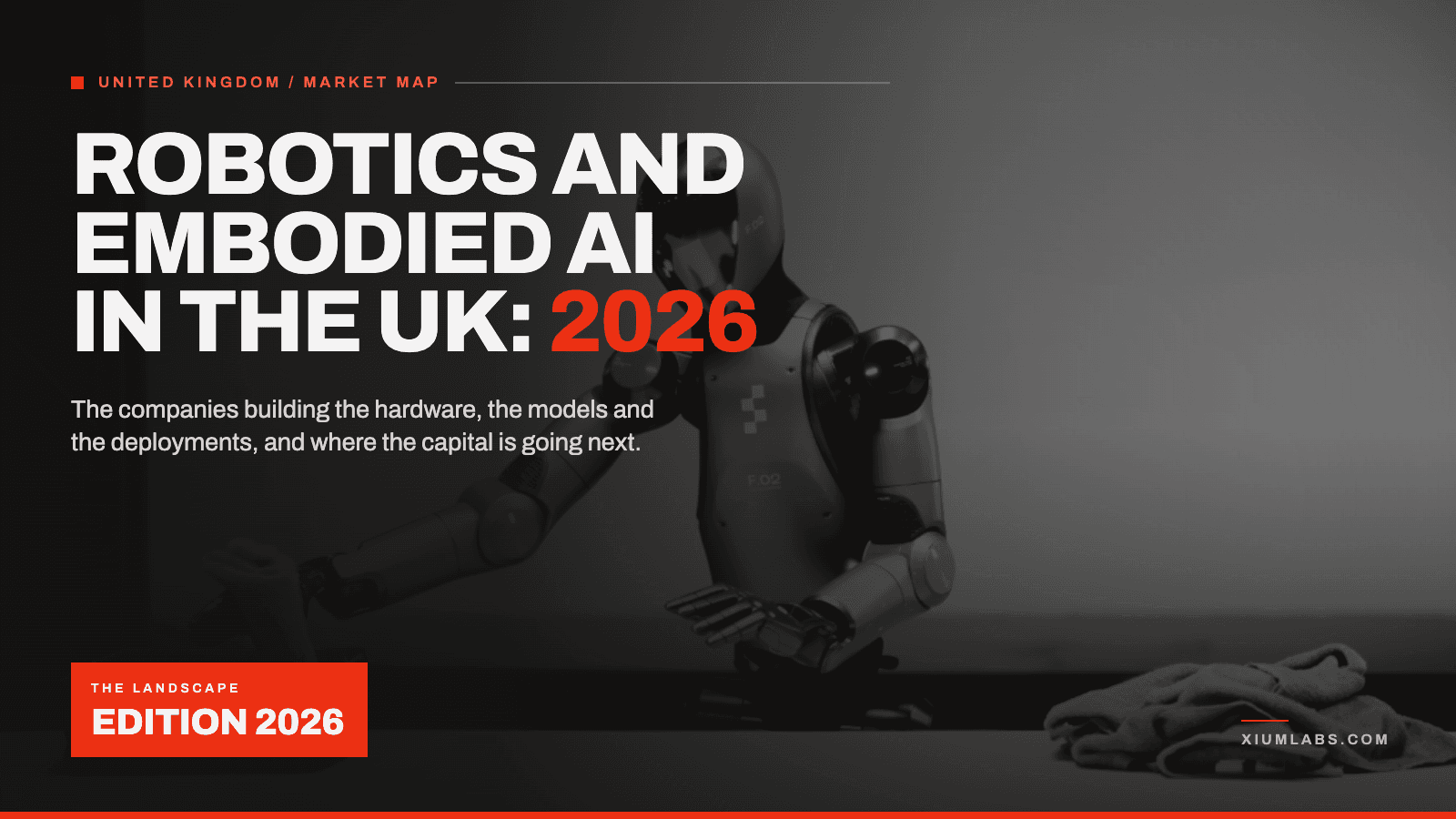 Applied AI
Robotics and Embodied AI Companies in the UK: The 2026 Landscape
The UK robotics and embodied AI companies that matter in 2026 from London's humanoid unicorn to Cambridge, Manchester and the North East, and who secures it all
Read more→ Cyber Security
Penetration Testing for London Businesses: How Our Team Works
London is a prime target: 43% of UK businesses were breached last year. Here is how our team runs penetration tests for London clients, from scoping to fixes and a free retest.
Read more→ Industry Insights
How UK AI Policy Is Reshaping AI Adoption in the North East, Manchester and London
The AI Opportunities Action Plan and the new AI Growth Zones are redrawing the UK's tech map. What the North East's 30 billion pound zone, Manchester's surge and London's scale mean for business.
Read more→